I still remember the first time someone handed me a 40-page “As-Is / To-Be” process document. It was neatly formatted, filled with swimlanes, and had more arrows than a Tolkien battle map. I flipped through it, nodded politely, and thought: “There’s no way this actually works.”
At the time, I was consulting for a large enterprise that swore by documentation. Everything had a flowchart. Every flowchart had a legend. And every legend had a version number.
The problem wasn’t the effort — it was the illusion of certainty. We believed that if we captured every step of the current state and every dream of the future state, we’d somehow bridge the gap through sheer detail. But that’s not how real change happens.
The Wake-Up Moment
One afternoon, during a backlog refinement session, a developer looked up from a story and asked:
“Is this how the process actually works? Because that’s not what we do.”
It hit me right there — our “As-Is” process was already obsolete.
People had adapted. Teams had found shortcuts. Workarounds had become the real process.
And the glossy “To-Be” state? It was someone’s best guess six months ago.
By the time we got there, it would be just another “As-Was.”
That’s when I stopped thinking of As-Is / To-Be as documentation and started using it as a conversation tool.
Scrum Changed Everything
Scrum gave me a rhythm for this.
Every Sprint became a small, inspect-and-adapt cycle on both the product and the process.
Instead of holding workshops to document the entire current state, we’d do quick discovery sessions:
- “What’s working right now?”
- “Where are we losing time or quality?”
- “What would ‘better’ look like two weeks from now?”
Those questions fueled backlog refinement. They led to stories that changed the process — not just described it.
By the next Sprint Review, our “To-Be” wasn’t theoretical. It was in production.
From Documents to Dialogue
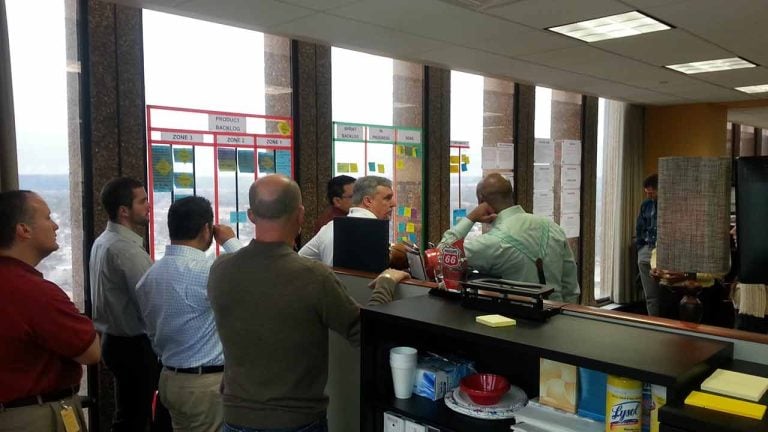
I began coaching Product Owners to use whiteboards instead of Word docs.
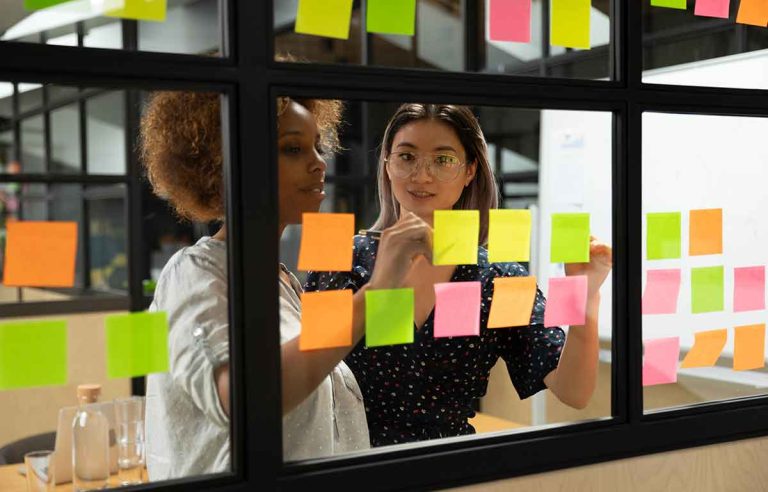
We’d sketch the As-Is journey on the left, the To-Be vision on the right, and put sticky notes in the middle for experiments.
- “Let’s try automating this handoff.”
- “What if we removed this approval step and just measured the outcome?”
- “Could we make that decision at the team level instead?”
Those became stories — tiny slices of transformation.
The backlog became our bridge from As-Is to To-Be, one Sprint at a time.
No sign-offs. No 40-page artifacts. Just continuous learning and improvement.
Why This Matters
Most organizations I work with today still cling to the old model. They spend months documenting before they start improving. But if your process is changing faster than your documentation, you’re managing a museum, not a living system.
Scrum gives us permission to learn as we go — to evolve the To-Be state through small bets, short feedback loops, and real customer outcomes.
The goal isn’t to get the process perfect on paper.
The goal is to build a process that works in practice.
Try This
Next time your team starts an “As-Is / To-Be” effort, try this instead:
- Start with a whiteboard, not a template.
Draw what’s happening today. Keep it messy — it should look like real life. - Ask what “better” looks like for the next Sprint, not forever.
Make your To-Be achievable in two weeks, not two years. - Turn ideas into backlog items.
Each improvement becomes a story you can inspect in your next review. - Celebrate the new As-Is.
Every improvement creates a new baseline. That’s progress.
The Bottom Line
The best As-Is / To-Be processes aren’t static diagrams.
They’re living conversations inside great teams — fueled by curiosity, grounded in evidence, and carried forward through every Sprint.
When you start treating As-Is / To-Be as a learning loop instead of a deliverable, you stop managing change and start embodying it.
About the Author
Mark Palmer is the founder of Great Fish Agility, a global training and coaching organization that helps leaders, teams, and organizations deliver value faster through practical agility. He teaches Certified Scrum courses, consults with Fortune 500 companies, and helps teams turn process documentation into real progress.